Mammoth Hot Springs: Yellowstone's Ever-Changing Travertine Wonderland
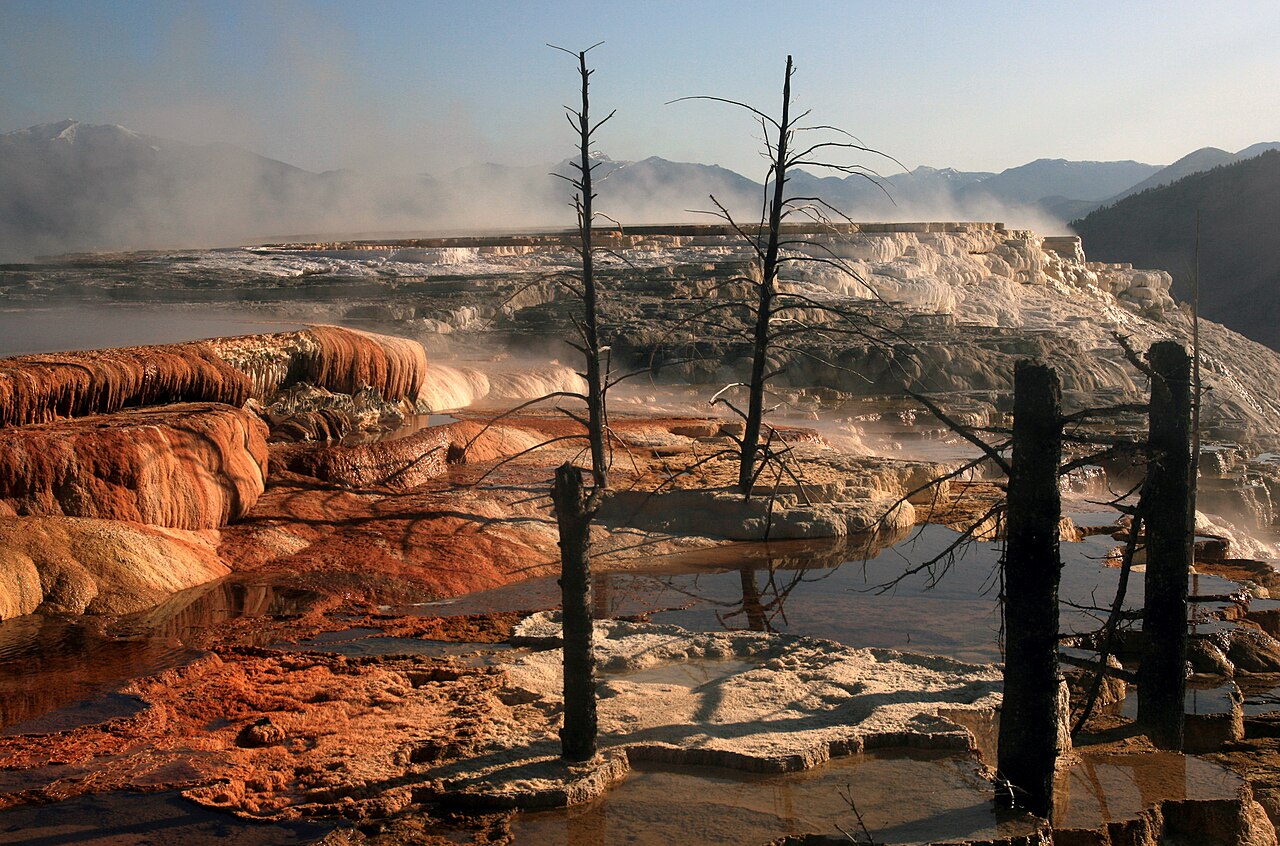
Nestled within the vast expanse of Yellowstone National Park, Mammoth Hot Springs presents a landscape unlike any other on Earth. Forget the explosive grandeur of geysers or the gurgling mystery of mud pots; here, visitors are transported to an alien realm of glistening white travertine terraces, sculpted by eons of geothermal activity. This remarkable feature stands out as one of the largest collections of hot springs globally, captivating onlookers with its unpredictable, ever-shifting beauty. A journey to Mammoth Hot Springs in Yellowstone National Park is not merely a sightseeing trip; it's an encounter with a living, breathing geological marvel that redefines itself with each passing day.
What truly sets Mammoth apart is its dynamic nature. Springs that once flowed vigorously might appear dry and ghostly white on your next visit, resembling ancient ruins. Simultaneously, new springs can erupt to life elsewhere, painting the landscape with fresh, vibrant hues. This constant transformation means that every encounter with Mammoth Hot Springs is unique, offering a truly singular experience that underscores the raw, untamed power of nature.
The Geological Marvel: How Mammoth Hot Springs Terraces are Forged
The Travertine Transformation: Nature's Sculpting Hand
The breathtaking terraces of Mammoth Hot Springs are a testament to a fascinating geological ballet performed deep beneath the Earth's surface. The process begins with rain and snow, which seep down into the earth, making their way to subterranean chambers where they are superheated by underlying magma. As this water reaches extreme temperatures, it becomes highly acidic and travels through ancient limestone deposits, dissolving vast quantities of the rock. Unlike the silica-rich sinter formations found in other thermal areas of Yellowstone, Mammoth's features are crafted from travertine—a softer, more rapidly forming type of limestone.
As this superheated, mineral-rich water rises back to the surface and cools, it can no longer hold the dissolved limestone in solution. Consequently, it precipitates calcium carbonate, depositing layers of travertine that gradually build up the iconic, pale, and often cavernous-looking formations. The vibrant colors observed on newly formed terraces—ranging from pristine white to soft peach or vivid yellow—are not mere rock but a living palette, owed to thermophilic (heat-loving) microorganisms thriving in the hot water. As springs shift and water flow ceases, older terraces fade to a dull gray, symbolizing the transient beauty of this extraordinary place.
A Dynamic Landscape of Constant Flux
The defining characteristic of Mammoth Hot Springs in Yellowstone National Park is its profound unpredictability. While some visitors might initially be disappointed to find a previously active spring "dry," this ephemeral quality is, in fact, the very essence of Mammoth's allure. Individual springs ebb and flow, appearing and disappearing with a regularity that makes "on-again-off-again" the rule rather than the exception. This constant reshaping means that the terraces are never static; they are continually being formed, eroded, and reformed, offering a truly unique spectacle on every visit.
It's crucial for visitors to understand that this rapid shifting of individual springs does not indicate a decline in the overall health of Mammoth. The total volume of water discharged by the entire system remains remarkably consistent. The changes are merely a surficial expression of the deep volcanic forces and the complex plumbing system beneath, constantly rerouting the flow of thermal waters. Embracing this dynamic nature allows for a deeper appreciation of Mammoth Hot Springs as a truly living landscape, a testament to Yellowstone's powerful geothermal heart.
Beyond Geology: The Rich History of Fort Yellowstone
The Birth of a Park Headquarters: Protecting a National Treasure
While the geological wonders are undoubtedly the main draw, Mammoth Hot Springs is also steeped in fascinating human history. This is not just a place of natural marvels; it's also the site of Yellowstone National Park's historic headquarters, Fort Yellowstone. When Yellowstone was established as the world's first national park in 1872, there was no existing blueprint for its management or protection. The vast, untamed wilderness quickly faced threats from poachers, vandals, and encroaching commercial interests.
It was the U.S. Army, not park rangers, who first stepped in to protect this wild new park. After enduring several brutally cold winters and grappling with the logistical challenges of managing such a vast area, the Army recognized the need for a permanent base of operations. In 1891, they commenced construction on Fort Yellowstone, beginning with the guardhouse, and steadily expanding the complex well into the 1930s. This fort served not only as a base for soldiers but also for their families and the growing number of tourists venturing into the park. For a more in-depth exploration of this fascinating era, delve into Fort Yellowstone's Legacy: A Historical Guide to Mammoth Hot Springs.
Exploring the Historic Fort Yellowstone Village Today
Today, many of the original historic structures of Fort Yellowstone still stand, offering a tangible link to the park's early days. A leisurely stroll through the village reveals architectural gems like the iconic Mammoth Hot Springs Hotel, the old post office, and the former Army barracks. While some buildings, such as the hotel, have undergone renovations over the years, they meticulously retain their original frontier charm and character. It’s a captivating blend of history and hospitality.
Beyond the historic buildings, visitors should keep an eye out for the resident "locals"—the magnificent elk. These majestic animals frequently lounge on the lawns of the fort, often appearing completely unperturbed by human presence. They are a common sight, embodying the wild spirit that Fort Yellowstone was built to protect. For those curious to delve even deeper into both Yellowstone's geothermal wonders and its rich human history, a stop at the Albright Visitor Center is highly recommended, offering insightful exhibits and educational resources.
Planning Your Visit to Mammoth Hot Springs
Experiencing the Terraces: A Guide to Exploration
To truly appreciate the grandeur of Mammoth Hot Springs in Yellowstone National Park, allow ample time for exploration. The area is divided into two main sections: the Upper Terraces and the Lower Terraces, both accessible via boardwalks and scenic drives. The Lower Terraces, often featuring active springs, are easily explored via an extensive boardwalk system that winds through and around the formations. The Upper Terraces offer a driving loop with several pullouts and shorter walking paths to various features like Orange Spring Mound and Minerva Terrace.
Practical Tip: Always stay on designated boardwalks and trails. The ground around hot springs can be thin and unstable, and the waters are dangerously hot. Wearing sturdy, comfortable shoes is advisable, as you'll be doing a fair amount of walking. Visiting at different times of day or in different seasons can offer entirely distinct perspectives—the steam is particularly dramatic on a cold morning, while the colors pop under bright midday sun.
Essential Tips for a Memorable Trip
- Dress in Layers: Yellowstone weather can be highly unpredictable, changing rapidly throughout the day. Layers allow you to adapt comfortably.
- Hydrate: Carry plenty of water, especially during warmer months or if you plan on extensive walking.
- Bring Binoculars: While elk are often close, binoculars can enhance wildlife viewing experiences, particularly for birds or animals further afield.
- Allow Time: Don't rush your visit. The beauty of Mammoth lies in its intricate details and subtle changes. Give yourself at least a half-day to explore both the terraces and the historic Fort Yellowstone village.
- Embrace Change: Remember, the springs are constantly evolving. What you see today might be different tomorrow. This is part of its magic, so let go of expectations from old photos and enjoy the current display.
Is Mammoth Hot Springs Worth the Journey?
Without a doubt, Mammoth Hot Springs is not just worth visiting—it's an absolutely essential stop on any Yellowstone itinerary. It offers a stark contrast to the explosive geysers of the Upper Geyser Basin and the bubbling mud pots of Hayden Valley, providing a uniquely serene yet powerful demonstration of geothermal forces. Its distinctive travertine formations and the sheer unpredictability of its active features make it a truly immersive experience that highlights Yellowstone's incredible geological diversity. If you're still weighing your options, our detailed guide, Is Mammoth Hot Springs Worth It? Yellowstone's Dynamic Terraces Explained, provides further reasons why this unique destination should be on your itinerary.
Beyond the geological spectacle, the rich history embedded in Fort Yellowstone adds another compelling layer to the visit. It's a place where you can witness nature's continuous artistry while also stepping back in time to understand the foundational efforts of park conservation. Few places in the world offer such a potent combination of natural wonder and historical significance.
Conclusion
Mammoth Hot Springs in Yellowstone National Park truly lives up to its billing as an ever-changing travertine wonderland. From the mesmerizing geological processes that sculpt its pale, flowing terraces to its pivotal role as the historic heart of the world's first national park, Mammoth offers an unparalleled experience. It's a place where every visit reveals something new, where ancient history coexists with dynamic natural forces, and where the raw beauty of Yellowstone truly comes to life. Whether you're captivated by geology, history, or simply the thrill of witnessing nature's unpredictability, Mammoth Hot Springs promises an unforgettable adventure that will undoubtedly leave a lasting impression.
