The Ever-Evolving Splendor of Mammoth Hot Springs in Yellowstone National Park
Nestled in the heart of Yellowstone National Park, Mammoth Hot Springs stands as a testament to both nature's ceaseless artistry and human ingenuity. Unlike the explosive geysers or bubbling mud pots found elsewhere in the park, Mammoth offers a dramatically different geothermal experience: a vast, alien-like landscape of glistening, white travertine terraces. This ever-shifting wonder, shaped by mineral-rich waters and vibrant thermophiles, isn't just a geological marvel; it's also the historical cornerstone of Yellowstone, home to the venerable Fort Yellowstone, where the park's legacy of protection first took root. A visit to mammoth hot springs in yellowstone national park promises a journey through both deep time and pivotal history, making it an essential stop for any adventurer.
The Ethereal Landscape of Mammoth Hot Springs: A Dynamic Masterpiece
What immediately strikes visitors to Mammoth Hot Springs is its unparalleled visual spectacle. Imagine vast staircases sculpted from pure white, peach, and yellow minerals, cascading down hillsides like frozen waterfalls. This is the magic of travertine, a form of limestone that builds these terraces layer by layer. The process begins with rain and snow seeping deep underground, where it’s superheated by magma chambers. This hot water, rich in dissolved limestone, then rises back to the surface. As it cools and meets the open air, it deposits the travertine, creating the pale, often cavernous-looking formations that define Mammoth.
The beauty of these formations is further enhanced by microscopic organisms known as thermophiles. These heat-loving microbes thrive in the hot water, painting newly formed terraces with striking hues of white, peach, and yellow. Older, inactive terraces, deprived of their mineral-rich water and thermophilic residents, gradually fade to a ghostly gray, resembling the ancient ruins of some fantastical city. This constant cycle of creation and dormancy means that the landscape is in perpetual flux. A terrace flowing vibrantly today might be dry and white tomorrow, while new springs can suddenly erupt in unexpected locations. This "on-again-off-again" rule is a defining characteristic of Mammoth, ensuring that no two visits are ever exactly alike.
Indeed, this unpredictable nature is what makes Mammoth truly unique among Yellowstone's thermal areas. The travertine formations grow much more rapidly than the silica-based sinter formations found around geysers like Old Faithful, thanks to the softer nature of limestone. While visitors might sometimes be disappointed if a favorite spring appears to have "died," it's crucial to understand this constant reshaping as part of Mammoth's living, breathing geology. For a deeper dive into this incredible phenomenon, explore Mammoth Hot Springs: Yellowstone's Ever-Changing Travertine Wonderland.
Fort Yellowstone: Guardians of the First National Park
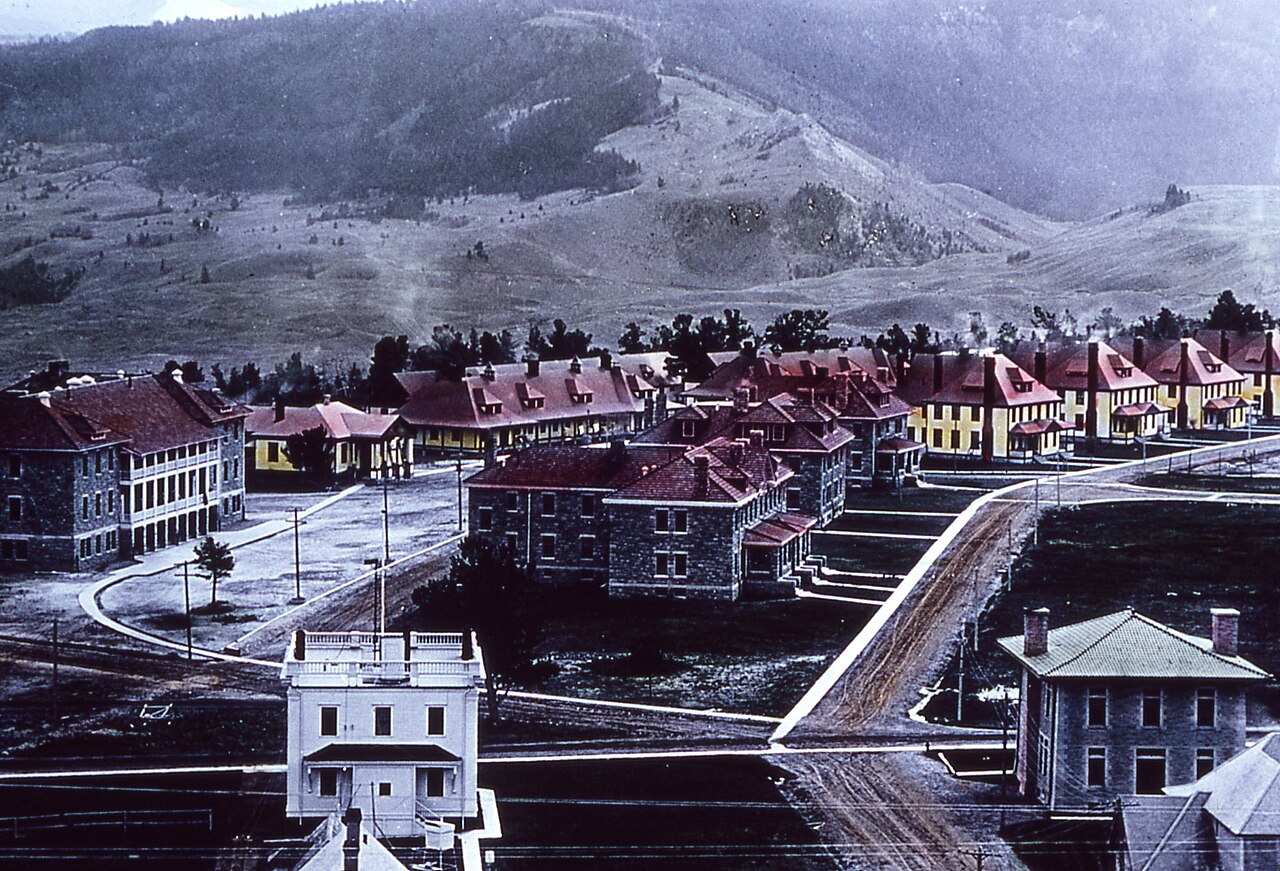
Beyond its geological wonders, Mammoth Hot Springs holds immense historical significance as the site of Fort Yellowstone. When Yellowstone was designated the world's first national park in 1872, the concept was entirely new. There was no blueprint, no established ranger service, and certainly no dedicated protection force. The park quickly fell prey to poachers, vandals, and illegal timber harvesting.
Recognizing the urgent need for management and enforcement, the U.S. Army was dispatched to protect this wild new frontier. After three challenging winters managing the vast, untamed wilderness, the Army realized their presence would be long-term. They needed a permanent base of operations, not just for soldiers, but also for their families and the burgeoning numbers of tourists beginning to discover the park. Thus, in 1891, construction began on Fort Yellowstone, starting with the iconic guardhouse. Over the next several decades, the fort expanded, with additional barracks, officers' quarters, a post office, and other essential buildings erected, shaping the village we see today.
The Army remained the primary protectors of Yellowstone for 32 crucial years, laying the groundwork for park management, conservation efforts, and visitor services. Their legacy is palpable throughout the Mammoth Hot Springs village. Many of the original historic structures still stand, beautifully preserved and repurposed. Visitors can walk among the old Army barracks, now used as park offices and housing, and admire the majestic architecture of the Mammoth Hot Springs Hotel, which, despite renovations, retains its original frontier charm. The old post office and various other buildings continue to tell the story of these pioneering park guardians. Keep an eye out for the local wildlife – elk often lounge on the fort's lawns, seemingly owning the place, a charming reminder of Yellowstone's wild heart. To delve deeper into this rich human history and the park's geothermal wonders, a stop at the Albright Visitor Center is highly recommended.
Experiencing Mammoth: Tips for Your Visit to Yellowstone's Historic Core
Is mammoth hot springs in yellowstone national park truly worth visiting? Absolutely. In fact, many consider it one of the top three essential stops in Yellowstone, offering a unique blend of geological wonder and profound historical insight that sets it apart from the rest of the park. It’s a place where the earth’s raw power meets the enduring spirit of conservation. If you're pondering whether to include it in your itinerary, our article Is Mammoth Hot Springs Worth It? Yellowstone's Dynamic Terraces Explained provides further compelling reasons.
To make the most of your visit to this extraordinary area, consider these practical tips:
- Explore Both Levels: Mammoth Hot Springs is generally divided into the Upper and Lower Terraces. Drive or walk the scenic loops to access various boardwalks. The Lower Terraces, often more active, can be explored via a boardwalk that winds through the formations, offering spectacular close-up views. The Upper Terraces provide expansive panoramic vistas of the entire complex.
- Best Time to Visit: Early mornings or late afternoons offer softer light for photography and generally fewer crowds. The changing light can also dramatically alter the appearance of the terraces, highlighting different colors and textures.
- Dress Appropriately: Yellowstone's weather can be unpredictable. Dress in layers and wear sturdy, comfortable walking shoes suitable for boardwalks and potentially uneven paths.
- Stay on Boardwalks: The travertine formations are incredibly fragile and the hot spring water is scalding. For your safety and the preservation of the delicate ecosystem, always stay on marked boardwalks and trails.
- Capture the Colors: The vibrant hues of the active terraces, contrasted with the ghostly white and gray of older sections, make for incredible photographic opportunities. Look for reflections in the pools and the steam rising against the sky.
- Watch for Wildlife: Elk are frequent visitors to the Mammoth Hot Springs village, often grazing on the lawns or resting under trees. Always maintain a safe distance from all wildlife.
- Visit the Albright Visitor Center: Located within Fort Yellowstone, this center offers excellent exhibits on the park's geology, ecology, and human history, including fascinating displays on the Army's tenure.
Conclusion
Mammoth Hot Springs in Yellowstone National Park is far more than just another thermal basin; it's a vibrant, living landscape that constantly reinvents itself, offering a unique visual spectacle found nowhere else on Earth. It's also a powerful historical landmark, where the very concept of national park protection was forged by the U.S. Army. From its dynamic, colorful travertine terraces to the enduring architecture of Fort Yellowstone, this district offers a profound experience that intertwines natural wonder with human legacy. A visit here is not merely seeing a sight; it's stepping into an ongoing story of geological transformation and pioneering conservation, a story that continues to unfold with every shifting spring and every passing season. Embrace the unpredictable, delve into the past, and discover the singular magic of Mammoth Hot Springs.
